
Content verified by

What is osseointegration?
Osseointegration is a surgical procedure that attaches a prosthetic limb directly to the bone, creating a stable and comfortable connection. This eliminates the need for a traditional socket, reducing skin irritation and improving movement.
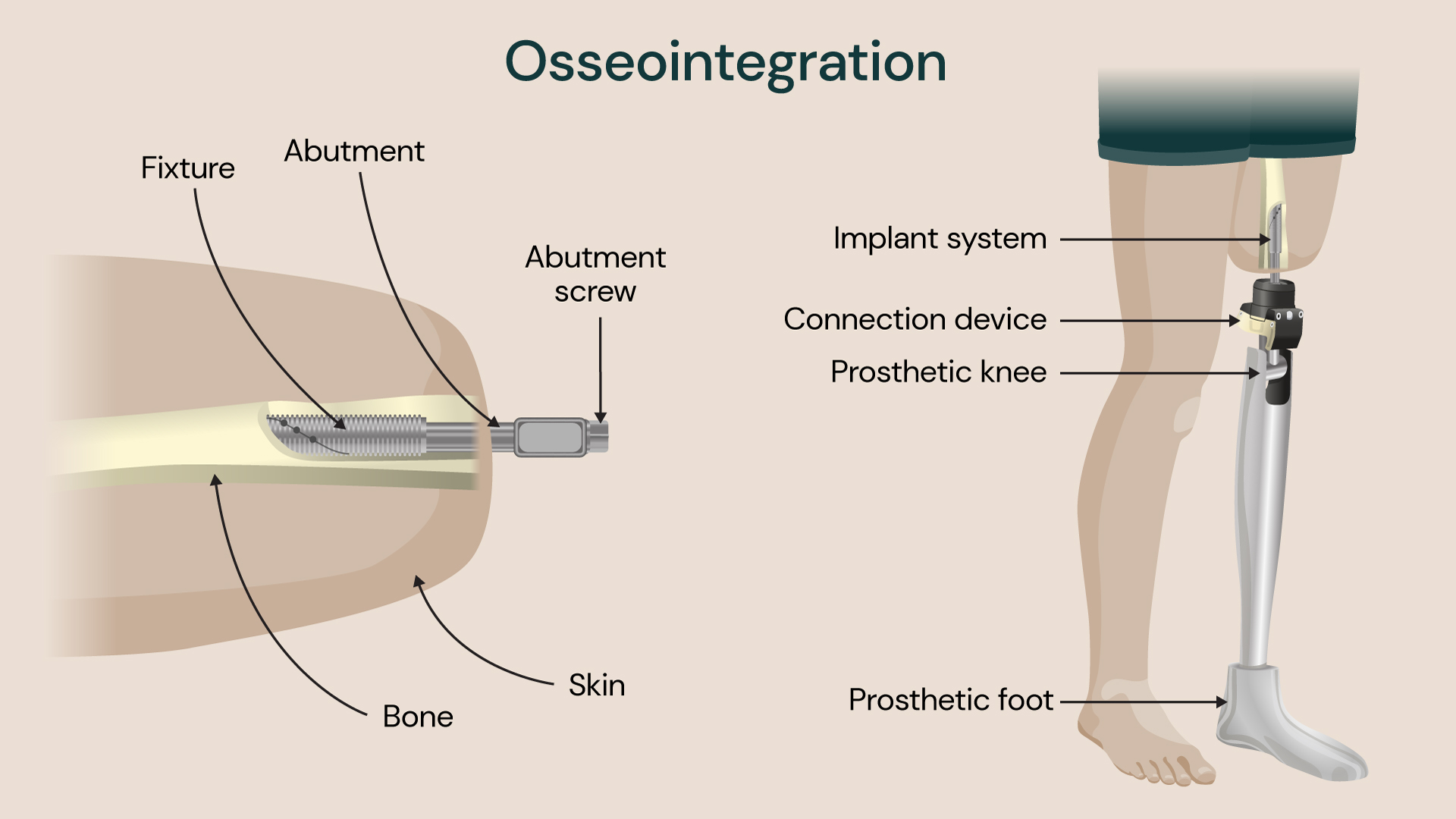
The process involves the implantation of a titanium fixture into the residual bone of the limb, allowing for direct skeletal fixation to the external prosthetic limb. This procedure is completed in 1 or 2 surgeries depending on the patient’s case and circumstances.
At St Thomas’ Hospital, our multidisciplinary orthoplastics team – the only one of its kind in the UK – combines plastic, reconstructive, and orthopaedic and prosthetic expertise to deliver the highest standard of care and long-term results.
Experts in osseointegration
Our world-leading surgical team provides:
- enhanced comfort and greater functional opportunities
- expertise in both bone and soft tissue management
- comprehensive support from specialist physiotherapists and prosthetists

Who might need osseointegration?
We may recommend osseointegration if you:
- experience discomfort or limited movement with a traditional socket prosthesis
- require high functionality due to your work or lifestyle
- have had long-term complications with a prosthetic limb
The procedure is particularly beneficial for active people or those whose work demands strength, stability, and dexterity. Your suitability will be assessed carefully by our surgical team.
What are the different types of osseointegration procedures?
Osseointegration surgery can be performed in 1 or 2 stages, depending largely on whether it’s for an arm or a leg. Legs usually require a 2-stage approach because the bone must fuse securely to support weight, while arms can often be treated in a single stage.
Single-stage osseointegration
Both the titanium implant and its connector, which attaches the prosthesis, are inserted during a single surgical procedure. This approach is common for implanting arm fixtures.
2-stage osseointegration
The implant is placed first, allowing the bone to heal around it before the connector is attached in a second procedure. This approach is often used for legs to ensure proper weight-bearing stability.
Your surgical team will recommend the most appropriate approach based on your limb type, overall health, and healing capacity.
To learn more about the different options available, get in touch to discuss your particular circumstances and eligibility with a specialist.
How is osseointegration performed?
Osseointegration is carried out under general anaesthesia. The main steps include:
- Implant insertion: The surgeon places a titanium fixture into the remaining bone of your limb. Our team utilises a screw fit system, the OPRA Integrum implant.
- Bone integration: Over the following months, bone tissue grows around the implant, securing it firmly in place.
- Connector attachment: A small titanium connector is passed through the skin and attached to the implant. This is where your prosthetic limb will connect.
After surgery, patients follow a personalised rehabilitation programme with physiotherapists and prosthetists to gradually restore strength, mobility, and balance. For 2-stage procedures, physiotherapy also begins after the first operation to maintain muscle tone and joint movement.
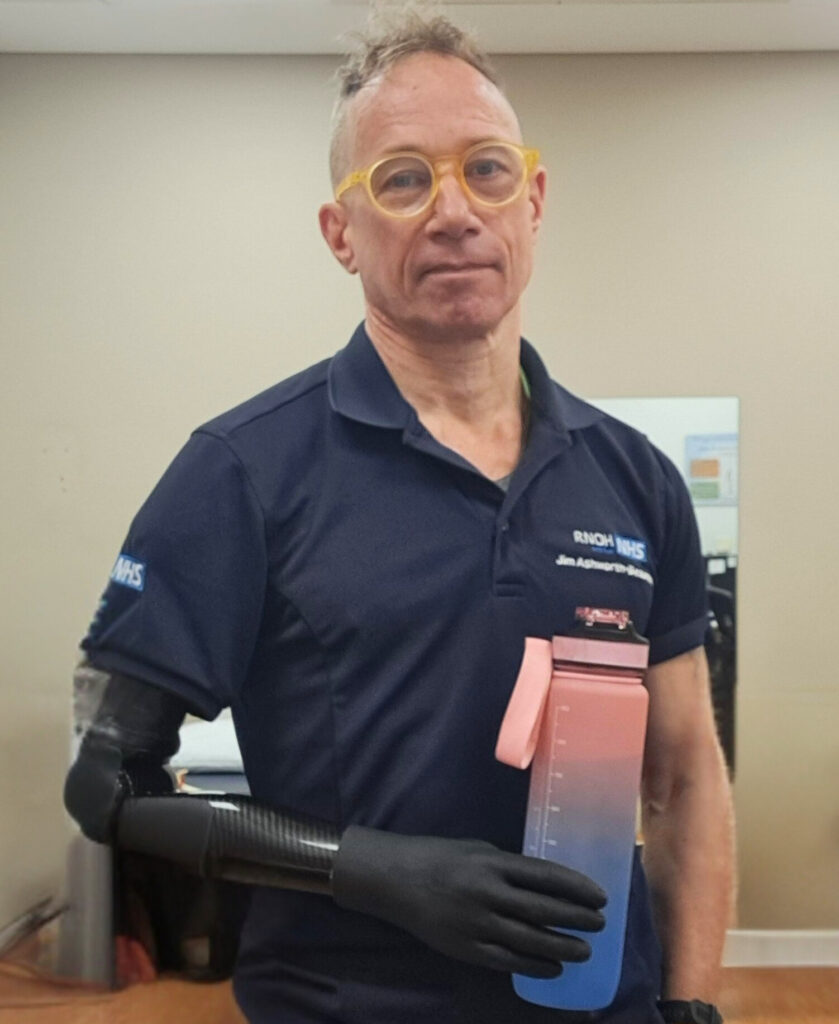
Jim, a patient treated at St Thomas’ by Mr Fitzgerald O’Connor, showcases his prosthetic arm attached with osseointegration surgery.
To enquire about osseointegration and whether it’s right for you, get in touch to book a consultation.
Preparing for osseointegration
Before surgery, our team performs a full multidisciplinary assessment involving surgeons, physiotherapists and prosthetic experts. Part of the assessment can include:
- blood tests to check overall health
- imaging scans (X-ray, CT, or MRI) to assess bone structure
- cardiovascular checks to ensure you are fit for surgery
Our specialist team will also give you personalised preparation advice ahead of your procedure. Common guidance includes:
- arranging transport to and from the hospital
- ensuring surgical site is free from infection
- specified by your consultant taking prescribed medication as instructed
How long does osseointegration take?
Surgery time varies depending on the limb being replaced. Single-stage procedures for arms typically take 2–3 hours, while 2-stage procedures for legs involve 2 shorter operations spaced 3 months apart to allow proper bone healing.
What is the recovery time for osseointegration?
Recovery after osseointegration can take several months. Most patients begin “implant training” around 12 weeks after surgery, gradually increasing weight-bearing and activity. Follow-up appointments monitor healing, assess how well the implant is integrating, and optimise prosthetic fit.
For patients undergoing 2-stage surgery, physiotherapy after the first operation is also important to maintain muscle strength and range of motion.
Benefits of osseointegration
Osseointegration offers significant advantages over traditional socket prostheses. By directly anchoring the prosthetic to the bone, it allows for easier attachment and removal of activity-specific prostheses, giving people greater flexibility in their daily routines. The direct connection also provides enhanced stability and control, enabling a wider range of movements and activities.
Many patients experience improved comfort and more natural movement, while common issues such as skin irritation and pressure sores are greatly reduced.
Risks of osseointegration
After osseointegration, as with any surgery, there are risks, including:
- bone fracture
- deep infection
- muscle pain
- nerve-related complications
- superficial infection
Your consultant will explain your personal risk profile and the steps we take to minimise complications. The combined expertise of both plastic and orthopaedic surgery means that our team is uniquely placed to reduce all risks and have the skills to manage any complication that can arise.
If you would like to speak to one of our consultants about the benefits and risks of osseointegration, we’re here to help. Contact us to arrange an appointment.
Locations
Our plastic surgery service for osseointegration is located at:
Discover our plastic surgeons
Our specialist plastic surgeons provide advanced care for a wide range of conditions, from reconstructive surgery after trauma or cancer, to elective procedures.
Book an appointment today
Call us on +44 (0)203 9934 388 to book your appointment today.
Alternatively, fill in our online enquiry form below and we will get back to you as soon as we can.