
Content verified by

What is snoring?
Many things can disrupt your sleep, and snoring is one of the most common. In fact, almost everyone snores at some point – even babies. Snoring is when you snort, rattle, or grumble while you’re asleep. The sound occurs when there is an obstruction (blockage) in your airway.
Snoring is often completely harmless, but sometimes can lead to sleep-disordered breathing. This can leave you feeling tired during the day or increase the risk of conditions like high blood pressure. Treatment depends on the severity of your snoring and sleep-disordered breathing, and can include lifestyle changes like losing weight, or using a CPAP machine that helps you breathe while sleeping.
At Royal Brompton and Harefield hospitals, our world-leading sleep experts can find the root cause of your snoring and provide you with a personalised treatment plan to help.
Experts in treating snoring
Our consultants in sleep medicine offer:
- short-notice appointments, in as little as 24 hours
- fast and accurate diagnosis for the cause of snoring
- personalised and effective treatment

Symptoms of snoring
Snoring can vary from person to person but it can sound like:
- whistling
- grumbling
- snorting
If you snore, you’re also more likely to:
- toss and turn during your sleep
- wake up with a dry mouth or sore throat
- feel more tired during the day
- have frequent headaches
- feel irritable
- struggle to focus during the day
You might not know that you snore until a bed partner tells you.
If snoring is disrupting your sleep and you would like to speak to one of our consultants, get in touch with our team to make an appointment.
What causes snoring?
Several factors cause snoring, which can vary from person to person.
Some of the most common causes of snoring include:
- your anatomy – if your soft palate is low, it can obstruct your airway when your body relaxes during sleep. Similarly, if you’re overweight, you may have extra tissue in the back of your throat that narrows your airway. Some people have an elongated uvula (the piece of tissue hanging at the back of your throat), which can also obstruct your airway and increase your snoring’s vibrations. Snoring can also be a sign of a condition called obstructive sleep apnoea
- drinking alcohol – drinking alcohol before bed relaxes your throat muscles and decreases your ability to stop them from obstructing your airway, making you snore
- nasal problems – a congested (blocked) nose or a deviated septum (a crooked partition between your nostrils) can cause you to snore
- not getting enough sleep – being sleep deprived can increase the risk of your throat relaxing too much and obstructing your airway
- your sleeping position – sleeping on your back generally causes loud snoring as gravity affects your throat, narrowing your airway
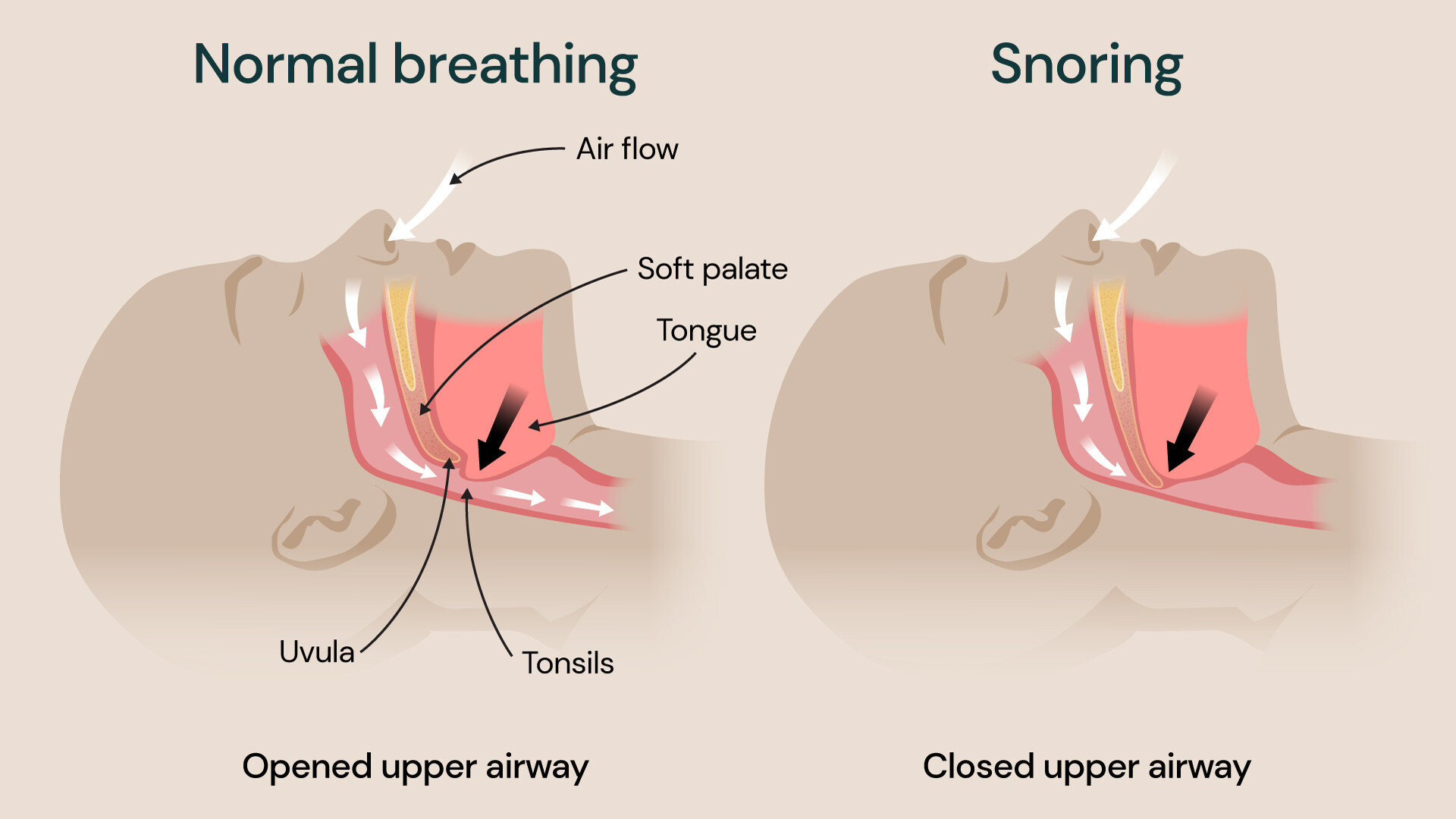
Snoring can be caused by your anatomy, where your soft palate obstructs your airway during sleep. This may also be a sign of sleep apnoea.
Who is at risk of snoring?
Anybody can snore, but some people may have a higher risk of snoring than others.
Risk factors for snoring include:
- gender – men are more likely to have sleep disordered breathing or obstructive sleep apnoea, which causes snoring
- being overweight – you have an elevated risk of obstructive sleep apnoea
- having a narrowed airway – a low soft palate (roof of your mouth), large tonsils or adenoids can cause the airway to narrow
- drinking alcohol – it relaxes your throat muscles and increases the chance of snoring
- a family history of snoring or obstructive sleep apnoea – genetics play a role in developing obstructive sleep apnoea
Complications of snoring
Snoring can be disruptive for you and your bed partner. However, it can also affect your general health and wellbeing – especially if linked to sleep disordered breathing or obstructive sleep apnoea.
Some potential complications associated with snoring include:
- feeling tired during the day due to disrupted, poor-quality sleep
- feelings of frustration or anger
- an increased risk of hypertension (high blood pressure), heart conditions and stroke
- heightened risk of accidents when driving or operating machinery due to lack of sleep
While snoring can cause several complications, many treatments are available to help you get more sleep and safeguard your health.
If you are concerned about your snoring and would like to speak to one of our sleep specialists, contact our team to arrange an appointment.
Diagnosing snoring
Typically, diagnosing snoring and its underlying cause takes various examinations and tests. First, you will need to have a consultation where we will discuss your symptoms, medical history and family history. We may also ask your bed partner about your snoring habits.
You may need further testing, such as imaging tests like an X-ray, computed tomography (CT) or a magnetic resonance imaging (MRI) scan. These scans can check for abnormalities in your anatomy, like a deviated septum.
A sleep study at our sleep disorder clinic may also sometimes be necessary. This is designed to analyse your:
- sleep stages via brain waves
- blood oxygen level
- heart rate
- breathing
- leg movements
We’ll explain which tests you will need during your consultation based on your symptoms and needs.
Our sleep specialists can provide a fast and accurate diagnosis for the underlying cause of your snoring. If you would like a consultation, contact our team to arrange an appointment.
Snoring treatment
Treatment for snoring depends on its severity and underlying cause, and our sleep specialists will determine which is best for you.
We may recommend lifestyle changes at first, including:
- losing weight and maintaining a healthy weight
- avoiding alcohol near bedtime
- maintaining a regular sleep schedule if possible
- trying not to sleep on your back
We might suggest a mouthguard, positional training devices, or treatment with a continuous positive airway pressure (CPAP) machine if obstructive sleep apnoea is the cause behind your snoring. This will involve wearing a mask over your nose and mouth while you’re sleeping, which feeds pressurised air into your airway to keep it open at night.
Sometimes, you may need surgery if no other treatments help your snoring, and it is causing significant problems with your health. As part of our ear, nose and throat service, we can provide surgical treatment for a deviated septum and upper airway surgery to remove and tighten excess tissue in your airway.
We will tailor our treatments to your needs so you can feel confident that they will alleviate your snoring and improve your sleep. Contact our team to arrange an appointment with our sleep specialists.
Locations
Our sleep specialists provide care at the following locations:
Meet our team of sleep specialists
Find treatment for your snoring with the support of our world-leading sleep specialists. We can provide a fast and accurate diagnosis, and develop a personalised treatment plan to help you sleep better.