
Content verified by

What is polydactyly in children?
Polydactyly, or extra digits, is a condition where your child is born with one or more additional fingers or toes. Usually, these additional digits are small and underdeveloped, and don’t cause any significant health problems.
Polydactyly is one of the most common congenital abnormalities (present at birth) and it can be easily treated. We recommend surgical removal as the most effective treatment, with minimal scarring.
Evelina London Children’s Hospital is recognised as one of the world’s leading centres for paediatric care. Our specialist paediatric plastic surgeons offer highly effective treatment for polydactyly, ensuring your child receives the best possible care.
Experts in treating polydactyly
Our world-leading children’s plastic surgeons offer:
- short notice appointments, in as little as 24 hours
- fast access to effective treatment
- same-day polydactyly surgery, so that your child can recover in comfort at home
Polydactyly symptoms in children
Doctors and midwives usually diagnose polydactyly at birth when they check your child’s hands and feet.
The additional digits can include:
- skin and soft tissue
- skin, soft tissue and bone, with or without a joint
Your child may have extra digits on just one hand, foot, or both. These extra digits can be seen:
- next to the outside of the little finger or toe (postaxial polydactyly)
- on the outside of the thumb or big toe (preaxial polydactyly)
- in the middle of the hand or foot, although this is uncommon (central polydactyly)
What causes polydactyly?
Polydactyly occurs while your baby is in the womb and its hands and feet begin to form. When the hand or foot starts to split into separate fingers and toes during foetal development, a single finger or toe can split again and create an extra digit.
No one knows the precise cause of polydactyly, but experts believe it runs in families. Your child may be more likely to be born with it if someone else in your family has it too.
Polydactyly may also occur due to medical conditions like Down’s syndrome and Diamond-Blackfan anaemia (a blood disorder that affects bone marrow and red blood cell production). However, in some cases, the cause of your child’s polydactyly remains unknown.
Complications of polydactyly in children
Generally, polydactyly doesn’t cause complications for children. They can often move their hands and fingers normally and the extra digits shouldn’t cause any pain.
However, polydactyly may cause emotional problems for your child as they grow up. Some children may be unhappy about it, which can harm their self-esteem. As such, some parents choose to have their child’s extra digits removed shortly after birth.
If you would like to speak to one of our paediatric plastic surgery specialists about polydactyly surgery for your child, contact our team to arrange an appointment at a time that suits you.
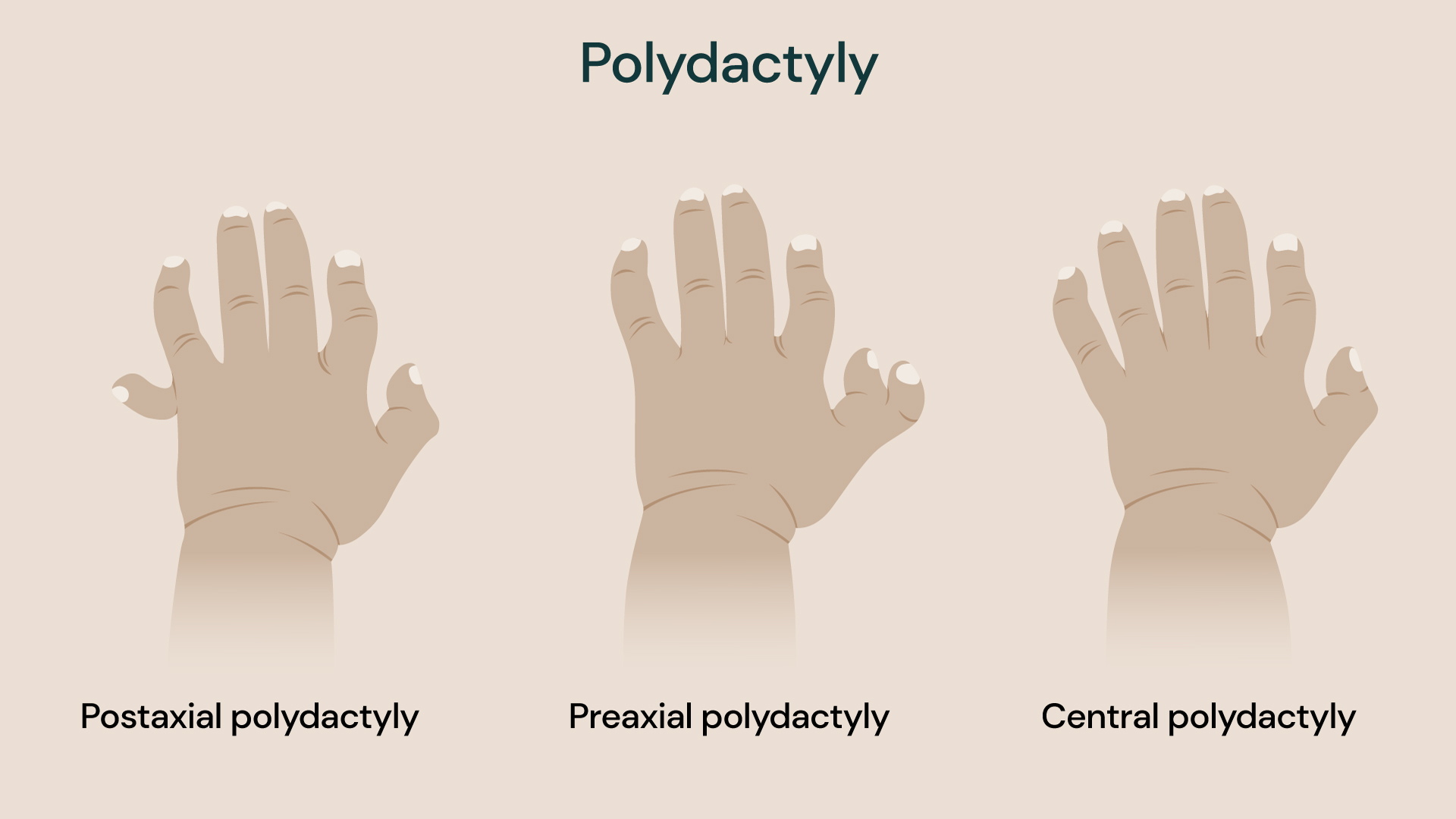
Illustration showing different types of polydactyly in children, including postaxial, preaxial and central polydactyly.
Diagnosing polydactyly in children
Having an ultrasound scan while you’re pregnant can sometimes result in a polydactyly diagnosis. However, it sometimes won’t be diagnosed until your baby is born and the doctor has had a chance to check them over.
If your child is born with polydactyly, we may recommend X-rays to assess the underlying structure of your child’s hand and determine the most suitable treatment for them.
Polydactyly treatment
We recommend surgical removal of an extra digit as it provides the most effective results.
We perform surgical polydactyly removal with local anaesthetic (if your child is under 3 months) and under general anaesthetic (if your child is over 3 months). The reason for this is that children under 3 months are less likely to move or react to the procedure. Using general anaesthetic for older children ensures they are safe throughout.
Once the anaesthetic has taken effect, our paediatric plastic surgeon will carefully remove the extra digit. Finally, they’ll stitch the wound closed and cover it with a dressing. This procedure can take up to 45 minutes to complete.
Helping your child recover at home
Once your child is ready to go home (usually soon after their procedure), we’ll give you all the information you need to support their recovery. We’ll tell you what pain relief medication to provide them with, although most children will only need this on the day of their treatment.
Following the procedure, you must monitor your child for signs of infection, like:
- redness around the area
- a high temperature
- feeling generally unwell
If your child shows signs of infection, always seek immediate medical advice, as they may need antibiotics.
After the first week of recovery, we’ll assess your child’s wound to ensure it’s healing correctly and has no signs of infection. The stitches used are typically dissolvable, so you won’t need to return to have them removed.
Once your child’s wound heals completely, it will leave minimal scarring and they’ll have full function of their hand or foot.
Arrange a consultation for polydactyly surgery
Our paediatric plastic surgeons at Evelina London are highly experienced in performing polydactyly surgery in children of all ages.
Complete our online enquiry form to arrange a consultation with our specialist team.
Reviewed regularly to reflect clinical best practice
Last reviewed: 08 October 2025
Locations
Our children's plastic surgery service is located at:
Discover our children’s plastic surgeons
Our team of highly skilled paediatric plastic surgeons can effectively remove extra digits. Our understanding team will ensure your child is comfortable and well looked after during and after their appointment.