
Content verified by

What is a pilonidal sinus?
A pilonidal sinus is a small hole or tunnel in the skin, usually located at the top of the buttocks. It is a common condition, and many people may not realise they have it unless it becomes problematic. While some cases remain mild, others can develop into infections that require medical attention.
When a pilonidal sinus becomes infected, it can form a painful abscess or cyst, causing swelling, redness and discharge of pus or blood. Treatment depends on your symptoms, the size of the sinus and whether the condition is recurring. Options may include antibiotics, drainage of an abscess, minimally invasive procedures such as endoscopic treatment (EPSiT), or pilonidal sinus surgery to remove the affected tissue and reduce the risk of recurrence.
Our specialists provide personalised care and a full range of treatments for pilonidal sinus, including advanced surgical options where needed to achieve the best long‑term outcomes. We treat both adults and children, with services available at St Thomas’ Hospital and Evelina London Children’s Hospital.
Specialists in treating pilonidal sinus
Our world‑leading gastrointestinal and children’s general surgery experts provide care for pilonidal sinus, including:
- short‑notice appointments for rapid assessment
- fast and accurate diagnosis, tailored to your symptoms
- quick access to treatment, including minimally invasive procedures and surgery where needed

Symptoms of pilonidal sinus
You may not be able to see your pilonidal sinus. However, you may be able to feel or see it in a mirror. A pilonidal sinus will look like a small hole or tunnel in your skin and it can easily get infected.
Symptoms of an infected pilonidal sinus include:
- pain and swelling at the top of the cleft in your bottom
- a pus-filled abscess in place of the hole
- difficulty sitting down without pain
- an abscess that leaks blood
Often, a pilonidal sinus infection comes on quickly, so you’ll need to seek prompt medical attention if you suspect you have an infection.
If you are experiencing pain, swelling or discharge at the base of your spine, complete our online enquiry form for specialist assessment.
Pilonidal symptoms in children
You may spot a pilonidal sinus on your child when they’re small. However, if you don’t pick it up, you might not know they have one until it becomes infected.
If your child complains of:
- pain when sitting down
- blood or pus when using the bathroom
- blood or pus in their underwear
You should seek medical assessment, as this may indicate an infected pilonidal sinus.
For reassurance and expert advice, complete our online enquiry form to speak to a specialist about your child’s symptoms and next steps.
What causes pilonidal sinus?
No one knows the exact cause of a pilonidal sinus.
However, experts believe it to be a result of:
- changing hormones during puberty
- friction from tight clothing
- sitting down for long periods
A pilonidal cyst is generally caused by hair becoming embedded in the skin. When this happens, the body creates a cyst around the trapped hair to push it out.
Who is at risk of a pilonidal sinus?
Pilonidal sinuses are more common in:
- men and young adult males
- those who are overweight
- people who sit down a lot
- people with thick body hair
Complications of pilonidal sinus
Sometimes, a pilonidal sinus causes no problems. However, they can become infected repeatedly over a long period, causing discomfort and pain regularly.
An increased risk of a type of skin cancer called squamous cell carcinoma may be another possible complication, because chronic inflammation can make that area of skin more likely to become cancerous.
With treatment, we can minimise these complications. Our dedicated team will provide personalised care to ensure you receive the proper treatment for your needs.
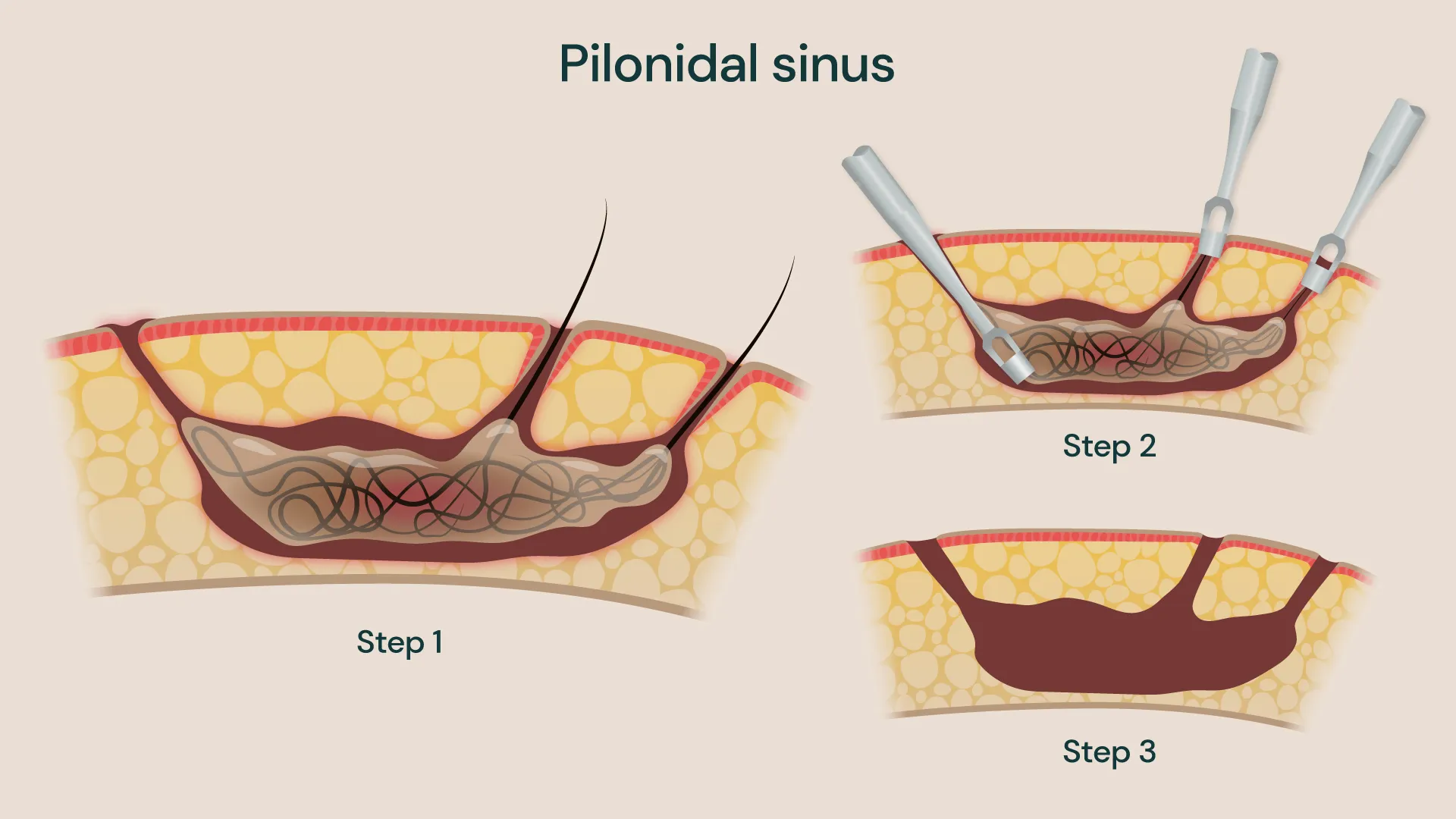
Illustration of a pilonidal sinus, a small tunnel under the skin often containing hair and debris, with step-by-step visuals demonstrating surgical treatment to open, clean and close the sinus cavity.
Diagnosing pilonidal sinus
Surgeons or dermatologists can usually diagnose a pilonidal sinus through a physical examination and by assessing your medical history. No further imaging or testing is required if it’s diagnosed with a physical examination.
However, if there is an infection, you may need an ultrasound scan to see the extent of the abscess. As a result, we can ensure we treat your infection in its entirety. In some cases, we also request an MRI scan to assess the nature of the disease further.
To find out whether you may need treatment or surgery, make an online enquiry today.
Pilonidal sinus treatment
Treatment for your pilonidal sinus will depend on different factors, such as:
- your symptoms
- the size of your pilonidal sinus
- if it’s a repeated infection or your first
If you have a pilonidal abscess, then it will usually be carefully cut and drained. Surgeons generally perform this with local anaesthetic to numb the area but some cases require a general anaesthetic.
Your surgeon or dermatologist will give you antibiotics to help clear any infection. They might recommend taking pain relief medications like paracetamol and ibuprofen to manage the discomfort and swelling.
If your pilonidal abscess keeps returning, then you may require further treatment.
If your symptoms are recurring or worsening, make an online enquiry to explore treatment options.
Endoscopic ablation
This treatment aims to clean your pilonidal sinus and promote healing.
During endoscopic ablation, a surgeon will insert an endoscope (a thin tube with a camera on the end) into the pilonidal sinus. The camera then relays a clear view of the affected area to a screen in the room for the doctor to see. This procedure is called endoscopic pilonidal sinus treatment (EPSiT).
They’ll remove any hair or infected tissue and clean the sinus with a special solution. They might use heat to seal up the sinus tunnel completely.
Surgeons or dermatologists perform an endoscopic ablation with either spinal, local or general anaesthetic. It’s less invasive than some of the older techniques that have been described and has a high success rate with a low risk of complications.
Pilonidal sinus surgery
If your pilonidal sinus repeatedly gets infected, then wide excision surgery might be necessary.
During this treatment, the surgeon will cut away your pilonidal sinus surgically. They can perform it under general or local anaesthetic, depending on your needs.
There are two types of excision surgery: one where the wound is left open to heal on its own, and another where it’s stitched closed. Open healing may be preferable as this type minimises the chance of your pilonidal sinus returning.
Treating pilonidal sinus in children
We vary our treatment approach from child to child to ensure we meet their specific needs.
We may use one of the following options to treat your child’s pilonidal sinus:
- antibiotics to clear up infection
- EPSiT procedure (endoscopic pilonidal sinus treatment)
- excision surgery (if necessary)
- incision and drainage of a cyst
- trephination procedure which is minimally invasive and may be combined with laser treatment
The trephination procedure is mostly commonly performed by our surgeons. This involves coring out the pilonidal sinuses and any ingrowing hair using a specialised instrument. The procedure is conducted as a day case operation and we have also combined this with laser treatment in conjunction with our paediatric plastic surgery team.
A general anaesthetic will be most likely as it ensures we can keep your child safe during the procedure. With our dedicated care and treatment, we can effectively treat your child’s pilonidal sinus.
Post-operative care for trephination surgery
Helping your child recover after their trephination procedure involves keeping the surgery wound clean and dry. You should follow the surgeon’s instructions for changing dressings, usually requiring gentle cleansing and applying fresh gauze regularly.
You should encourage your child to avoid sitting for prolonged periods and to lie on their side to reduce pressure on their bottom. You child will be prescribed medication to aid their recovery and reduce the risk of infection, but you need to monitor them for any signs of infection, such as increased redness, swelling or discharge from the wound.
Most importantly, ensuring proper hygiene, including regular showers and hair removal around the site (if advised by the doctor), can prevent recurrence.
Finally, encouraging a fibre-rich diet helps your child to avoid constipation, which can strain the area while it is still healing.
Get expert care for pilonidal sinus
If you are experiencing symptoms or have been diagnosed with a pilonidal sinus, our specialist team is here to help. We provide fast access to assessment, personalised treatment and expert surgical care to relieve symptoms and support your recovery.
Complete our online enquiry form to request an appointment and speak to a specialist.
Reviewed regularly to reflect clinical best practice
Last reviewed: 29 July 2025
Locations
Our pilonidal sinus services are offered at the following locations:
Meet our pilonidal sinus experts
Our highly-trained team can perform various effective procedures to treat pilonidal sinus in adults and children. We’ve also created a child-friendly environment, so your child will feel comfortable and relaxed during their time with us.