
Content verified by
What is achalasia?
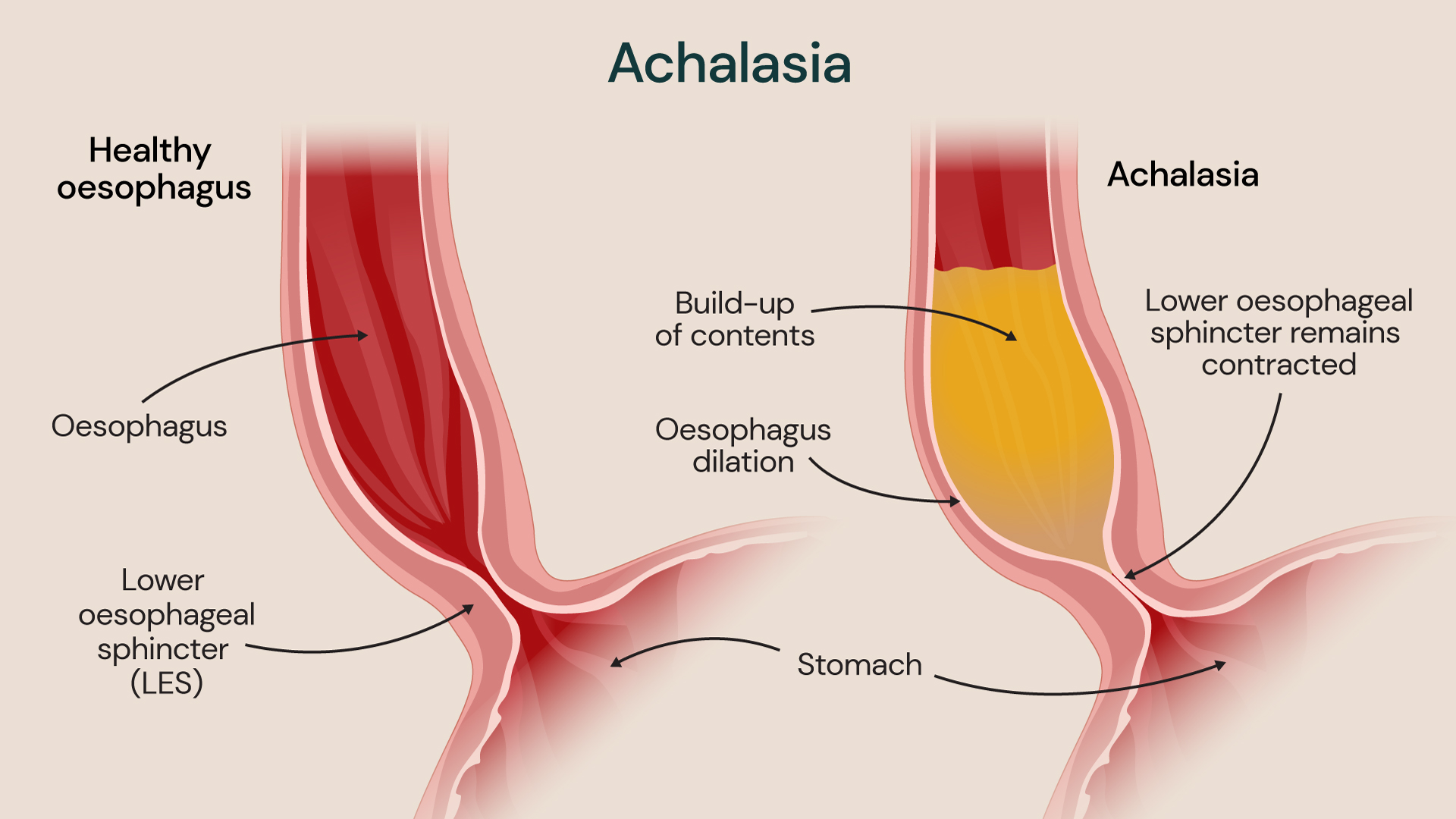
Achalasia is a rare swallowing disorder that can affect both adults and children. Usually, the oesophagus transports food and drink from the mouth to the stomach through a ring of muscle at the top of the stomach called the lower oesophageal sphincter (LOS). This muscle should relax to allow food and drink to move into the stomach.
Your LOS does not relax if you have achalasia. It prevents food from entering your stomach, often leading to uncomfortable symptoms like regurgitation, chest pain and heartburn.
At St Thomas’ and Evelina London Children’s hospitals, our specialists offer comprehensive diagnostics and personalised care for adults and children with achalasia.
Experts in achalasia treatment
Our world-leading consultants offer:
- Short-notice appointments
- Fast and accurate diagnosis
- Fast access to treatment

Who is at risk of achalasia?
Anybody can develop achalasia, including children. However, it is most common in people between 25 and 60. Achalasia may also be more common if you have allergic disorders or adrenal insufficiency (where your adrenal gland doesn’t produce enough hormones).
If you think you’re at risk of developing achalasia, or you’re beginning to experience some symptoms, contact our customer care team to learn more about treatment options.
Symptoms of achalasia
Achalasia symptoms generally progress slowly and can last for months or years. Some of the most common symptoms of achalasia include:
- bringing up undigested food
- chest pain
- coughing at night
- heartburn
- hiccups
- malnutrition
- problems swallowing (dysphagia)
- struggling to belch
- unintentional weight loss
Achalasia symptoms in children
Children with achalasia may have more difficulty swallowing solid foods than liquids, which can be the first sign of the condition.
Other achalasia symptoms in children include:
- chest pain
- heartburn or regurgitating their food
- not wanting to eat
- slow or poor growth
- struggling to put on weight
- vomiting while eating or not long after
If you think your child may have achalasia or difficulty swallowing, speak with our dedicated paediatric specialists to ensure they receive the care they need.
What causes achalasia?
The reason why your LOS fails to open and close normally in achalasia is unknown. However, specialists believe it could be due to an autoimmune disease causing your immune system to attack the nerve cells in your oesophagus and LOS.
Complications of achalasia
Achalasia can become serious if left untreated, as you’ll find it increasingly challenging to eat and swallow. This difficulty can lead to weight loss and malnutrition, which can cause delayed growth in children.
People with achalasia also have a slightly elevated risk of oesophageal cancer. However, regular screenings of your oesophagus can catch any signs early and treat them.
If you’re experiencing symptoms of achalasia, contact our customer services team to make an appointment with one of our gastrointestinal specialists.
Diagnosing achalasia
Achalasia typically requires diagnostic imaging tests as it can be taxing to confirm through a physical examination and symptoms assessment alone.
Some of the imaging tests performed to diagnose achalasia are:
- upper endoscopy – a gastrointestinal specialist will insert a thin, flexible tube with a camera on one end through your mouth and down your oesophagus to relay images of your throat and LOS to a screen so we can check for any narrowing or abnormalities
- oesophageal manometry – measures your oesophagus’s muscle contractions when you swallow and checks how well your LOS opens
- barium swallow – you’ll swallow a mixture containing barium, which will show clearly on an X-ray and highlight any narrowing of your oesophagus or LOS
Achalasia treatment
There are many ways to treat achalasia; the correct one will depend on your needs and the severity of your condition.
Medications which aim to relax your LOS may be the first option recommended to you. An example of this is Botox injections. We can inject Botox into the muscles near your LOS to stop it from contracting and allowing it to remain open. However, medication and injections provide only short-term relief.
Another non-surgical option is oesophageal dilation. Our gastrointestinal team will lightly sedate you and pass a medical-grade balloon down your throat and into your LOS. We then inflate the balloon, which opens the LOS and minimises your achalasia symptoms.
Alternatively, we may recommend minimally invasive gastrointestinal surgery. The most common surgeries to treat achalasia are a laparoscopic Heller myotomy and a peroral endoscopic myotomy (POEM).
A laparoscopic Heller myotomy is where the surgeon makes several small incisions in your abdomen to insert a camera and operating instruments. They then cut the muscle fibres of your LOS to open up the bottom of the oesophagus.
Sometimes, they will perform another procedure called fundoplication simultaneously. This simple procedure involves wrapping the top of your stomach around the oesophagus to prevent acid reflux or gastro-oesophageal reflux disease (GORD) from developing because of the opening of your LOS.
A POEM procedure follows the same principle as a Heller’s myotomy in that it divides the muscle of the lower oesophagus to open the LOS. In a POEM procedure, the instruments are passed via an endoscope inserted through the mouth, rather than through cuts in the abdomen.
Our team will discuss your options so you can be confident in the treatment plan we provide. Contact us to learn how our consultants can help treat your achalasia.
Treating achalasia in children
We recommend a laparoscopic Heller myotomy or oesophageal dilation to treat achalasia in children. Both treatments can offer long-term relief from achalasia and reduce your child’s risk of developing further complications.
Our expert-led paediatric specialists ensure your child is safe and comfortable while with us, so you can be sure your child is in capable hands.
Reviewed regularly to reflect clinical best practice
Last reviewed: 04 March 2026
Locations
Discover our dedicated gastrointestinal specialists
Our supportive team can help manage and treat achalasia in adults and children. With our help, you can find relief from the condition and minimise your risk of complications.